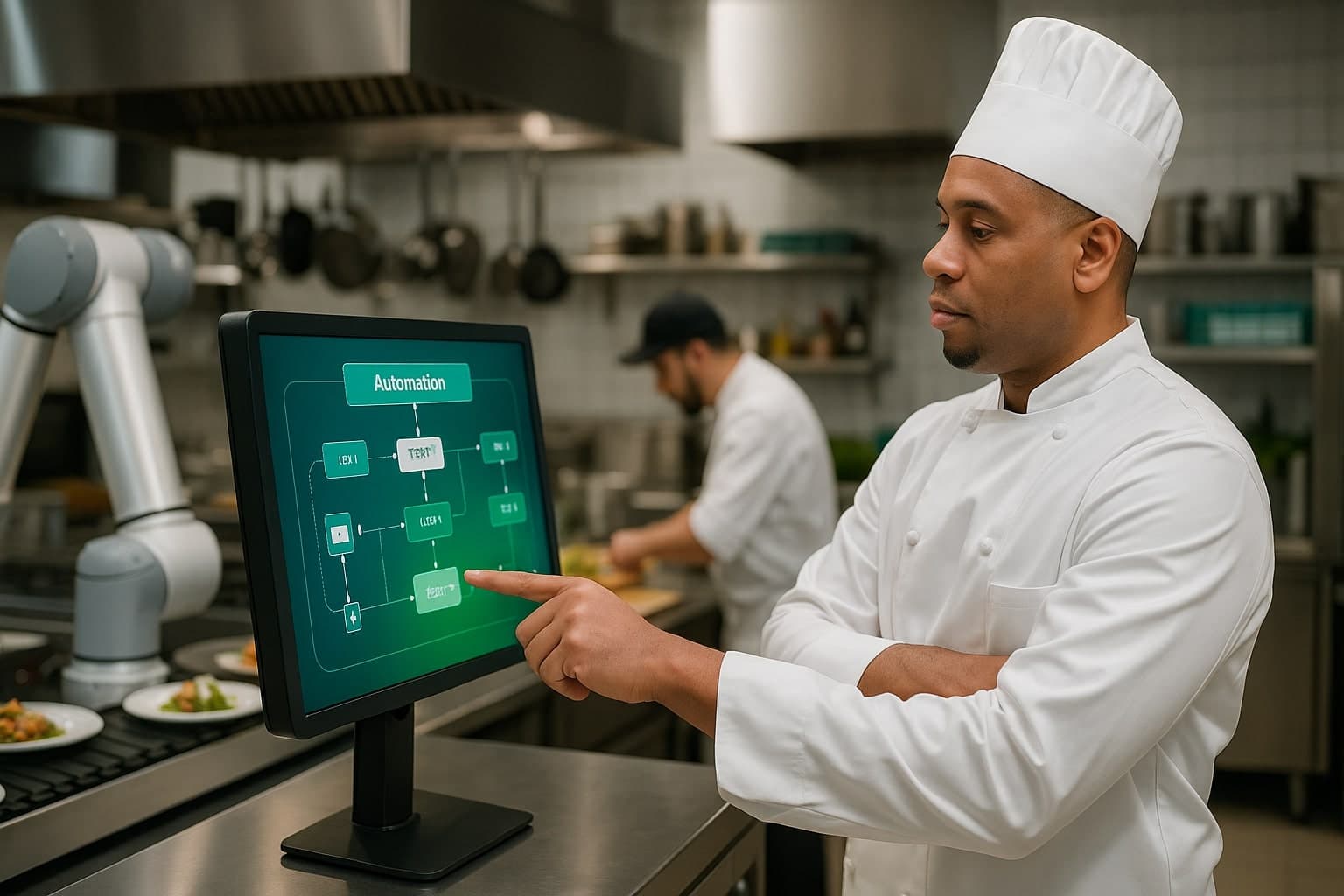

Choose cloud-based restaurant systems if you need remote access, run multiple locations, or want lower upfront cost - which fits most modern operators. Choose on-site systems only if you have unreliable internet or strict control requirements that cloud cannot meet. For the majority of restaurants today, cloud is the default because visibility across locations is worth more than local control.
When I ran 14 locations, the single biggest operational unlock was being able to see every site from one screen, anywhere. That is a cloud capability. On-site systems have their place, but for most operators the question answers itself the moment you value visibility. Before cloud, knowing what was happening at a site meant being at the site or calling someone who was. After cloud, I could check labor at every location from my phone at six in the morning. That one shift - from asking for numbers to seeing them - was worth more than any single feature either architecture offered.
That said, architecture is a smaller decision than operators think, and I will get to why. The cloud-versus-on-site question gets a lot of attention because it sounds technical and important. In practice it is a tiebreaker, not the main event. The main event is whether the tool fits your process. But since you do have to pick one, here is how the tradeoffs actually shake out from an operator's chair.
The Core Difference
Cloud systems run on the vendor's servers and you access them through the internet. On-site systems run on hardware in your restaurant. That single distinction drives every tradeoff that follows - access, cost, reliability, and control. Everything else is downstream of where the software actually lives. Once you understand that one fact, the table below stops being a list of features to memorize and becomes a set of consequences you can reason about. If the software lives on the vendor's servers, you get reach and you depend on a connection. If it lives on a box in your back office, you get local independence and you own the maintenance. Every row in the comparison is just that one tradeoff playing out in a different column. You do not have to memorize the table - you have to internalize the single fact that produces it, and then you can reason your way to the right call for any factor a rep throws at you.
Cloud vs On-Site at a Glance
| Factor | Cloud | On-site |
|---|---|---|
| Remote access | Anywhere | On premises only |
| Upfront cost | Low, subscription | High, hardware and license |
| Multi-location | Built for it | Hard to consolidate |
| Offline reliability | Needs internet | Runs without internet |
| Updates | Automatic | Manual, often paid |
When Cloud Is the Right Call
For most operators today, cloud is the answer. It gives you remote visibility, scales across locations without reinstalling anything, and turns a big upfront hardware bill into a predictable monthly cost. If you run or plan to run more than one site, cloud is almost always correct. The multi-location case alone usually settles it. Consolidating reporting across sites with on-site systems means stitching together separate boxes, separate updates, and separate data, and the stitching never quite holds. Cloud was built for the one-view-across-everything problem that defines multi-site operations.
- You run or plan multiple locations
- You want to see the operation from off-site
- You prefer predictable subscription cost over a big upfront spend
- You want automatic updates without IT overhead
When On-Site Still Makes Sense
On-site is not dead. If your internet is genuinely unreliable and a POS that goes down with the connection would cripple service, local hardware buys you offline resilience. Some operators also choose on-site for strict data control. But understand the tradeoff - you take on the hardware, the updates, and the upgrade cycle. That is a real operational burden. You become the IT department: when the box fails on a Saturday night, when the update breaks something, when the hardware ages out in five years and needs replacing, that is all yours. Choose on-site with eyes open about the ongoing cost, not just the one-time control it buys you.
The good news is many modern cloud POS systems now run in an offline mode that syncs when the connection returns, which closes the gap that used to make on-site mandatory. A decade ago, weak internet genuinely forced your hand toward on-site. Today, a cloud POS with a solid offline mode keeps taking orders through an outage and reconciles everything when the connection comes back. That has narrowed the on-site case to a thin band of operators with truly chronic connectivity problems or genuinely strict data-control mandates. When you evaluate that offline mode, do not take the rep's word for it - ask exactly what still works with the internet down and what does not. The good ones keep order entry, payment capture, and the kitchen flow running locally and sync the moment the connection returns. The weak ones call themselves offline-capable but quietly lose half their function the instant the connection drops. Test it by unplugging the demo if you have to. That one check tells you whether weak internet is still a real reason to consider on-site or just an old reflex.
Whichever architecture you pick, make sure it pays off. The automation ROI calculator estimates your payback in under a minute.
Calculate your ROIArchitecture Is Not the Real Decision
Here is what operators miss: cloud versus on-site is a smaller decision than process fit. A cloud tool that does not match your workflow is worse than an on-site tool that does. Decide what process you are fixing first, then let access needs and internet reliability break the tie between cloud and on-site. Most businesses have a systems problem, not an architecture problem. I have watched operators spend weeks agonizing over cloud versus on-site and zero time on whether either tool actually fixed their most expensive process. They optimized the tiebreaker and ignored the main question. Do not be that operator. Get the process fit right, and the architecture choice usually settles itself in five minutes.
A Decision Framework You Can Run in Ten Minutes
When an operator is genuinely stuck, I walk them through this order. It puts the big questions first and lets architecture fall out naturally at the end instead of dominating the decision.
- Name the most expensive process you are trying to fix and confirm the tool actually fixes it.
- Shortlist only tools that fit that process well - ignore architecture entirely at this stage.
- Ask whether you run or plan multiple locations - if yes, cloud is almost certainly your answer.
- Ask whether your internet is genuinely unreliable - if yes, require a strong offline mode or consider on-site.
- Let those two questions break the tie among the tools that already fit your process.
The Bottom Line
Choose cloud if you value remote visibility, run multiple sites, or want lower upfront cost - which describes most operators today. Choose on-site only if unreliable internet or strict control demands it. Either way, pick the tool that fits your process first and let architecture break the tie. The system you run matters more than where the server sits. Spend your real decision energy on process fit and adoption, and treat cloud versus on-site as the last, smallest question rather than the first and largest one.