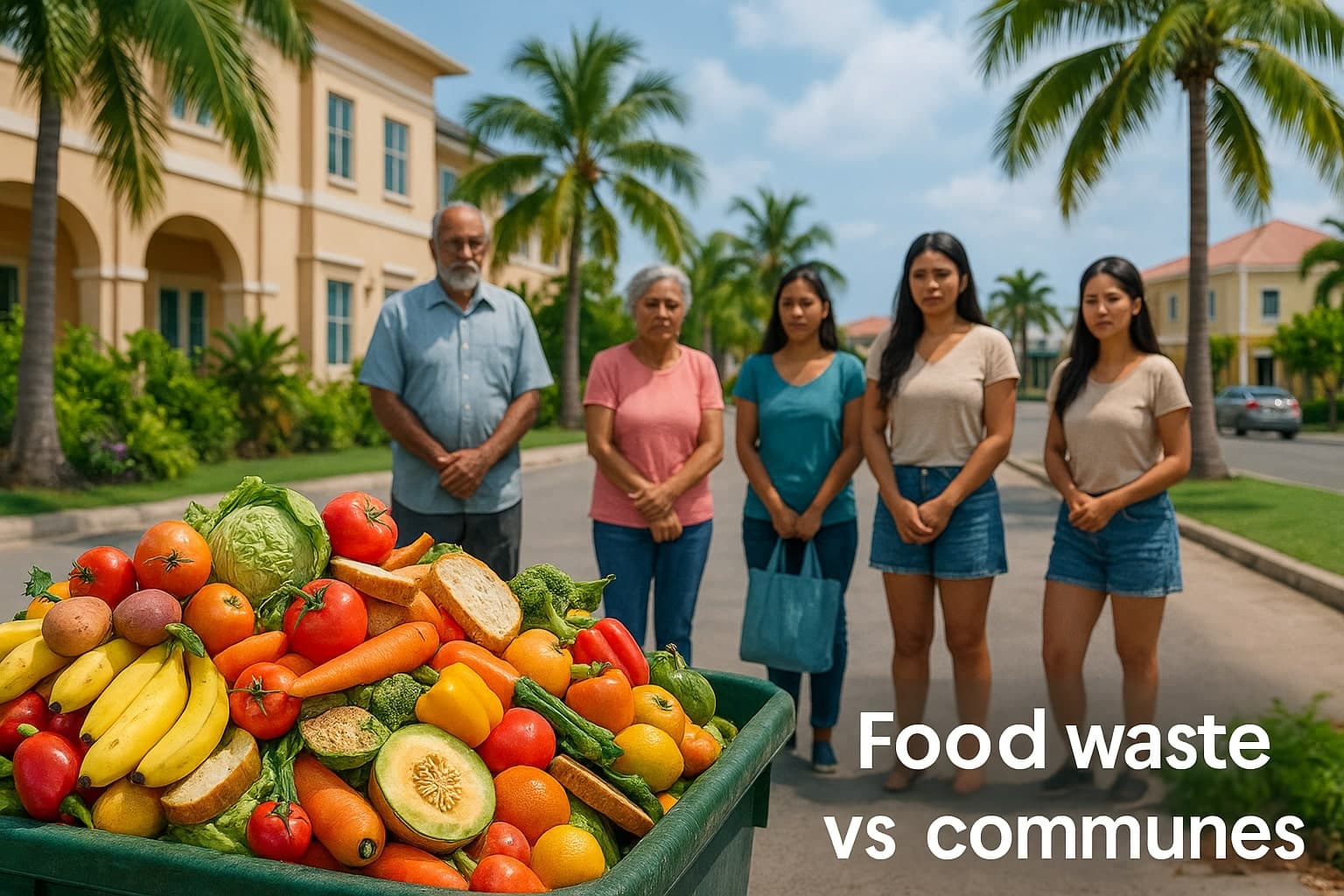

Most restaurant food waste is not a scarcity problem or a willingness problem - it is a coordination problem. Surplus is edible when it is produced and worthless a day later, and manual coordination is too slow to close that gap. Track waste to see the pattern, then remove the coordination barrier so surplus moves before it expires.
The Cayman Islands waste thousands of tonnes of food annually. At the same time, community hunger is real and under-addressed. The root cause isn't scarcity - it's coordination failure. That same failure is sitting in most multi-site food operations, quietly showing up as food cost.
The Problem
Restaurants, hotels and grocers produce surplus food daily. Most of it gets thrown away because coordination takes time nobody has. By the time a donation is arranged, the food has expired.
Charities need reliable supply. Restaurants need zero-friction redistribution. Neither had a tool that made it easy enough to actually happen consistently.
The Root Cause
There was no efficient way to connect surplus food with the people who needed it. Coordination and logistics barriers prevented redistribution even when every party wanted it to happen. Willingness was never the constraint - speed was.
I Ran Into This Myself
I had 50 lbs of fresh vegetables expiring daily and no way to redistribute them. I tried everything - phone calls to charities, Facebook groups, driving food across the island myself after a 14-hour shift. It didn't scale, because manual coordination never does. That's the problem ShareTable was built to remove.
The Fix: Remove the Coordination Barrier
A platform connecting food producers holding surplus with charities and communities that need it. Log surplus in seconds. Recipients see it instantly. Pickups get coordinated without the back and forth that kills most donation attempts.
What Happened at Marco's
Marco's Italian Restaurant had dozens of portions of fresh food expiring daily and no efficient way to move them. Lost money, wasted food, community left unserved. The problem was coordination, not willingness - they wanted to donate, they just couldn't make it work consistently.
The first version was deliberately simple: connect Marco's with local charities. One message, one handoff, food saved. No phone calls, no back-and-forth, no food expiring while the coordination was still happening.
Other restaurants saw it working. Food banks asked for access. Nonprofits wanted in. The network grew because the system worked, not because anyone promoted it.
The Impact
- Surplus food redirected from landfill to people who need it
- Restaurant food value recovered instead of written off
- Good food kept out of the waste stream
- Community members fed who otherwise would not have been
What This Means for Your Operation
Systems work. One operator, one tool, meaningful impact. The food was always there and the goodwill was always there - the coordination gap was the barrier. Remove the barrier and the impact happens on its own.
Start by measuring. You can't cut what you don't track, and most operators are surprised by where their waste actually concentrates once they log it for two weeks.
You cannot cut what you do not measure. Start with a waste tracking system.
How to track food wasteWaste is usually a food cost problem wearing a different hat.
Manage food costs across locationsShareTable exists to move edible surplus before it becomes waste.
See ShareTable